How to Remove White Limescale From Bottle Sterilizers and Bottles
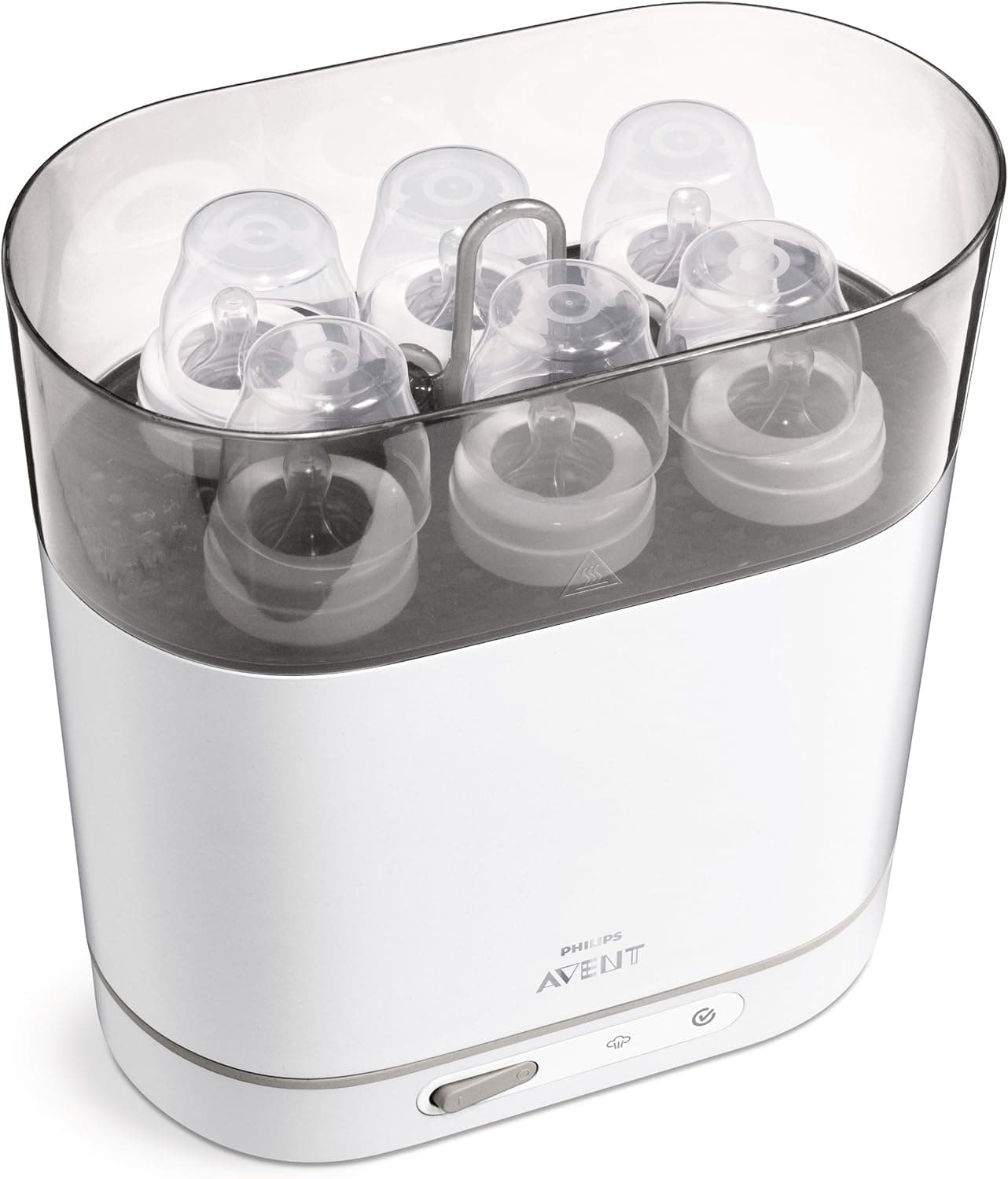
White, chalky residue on baby bottles, nipples and inside steam sterilizers is almost always limescale, the mineral deposits left behind when hard water evaporates. It is generally not harmful, but it looks unclean, can affect how well sterilizers heat and may leave a cloudy film on bottles. Regular descaling and a few changes to water use keep sterilizers working efficiently.
Why limescale builds up
Tap water in many areas contains calcium and magnesium. When a steam sterilizer heats water, the water evaporates and leaves minerals behind on the heating plate and on bottles, where they gradually form white crusty deposits.
Homes with hard water see build-up quickly, sometimes within a week or two of daily use. Dishwashers and bottle warmers can also leave similar white spots on bottles.
Descale the sterilizer
Always follow the manufacturer's descaling instructions first. Many recommend a mixture of white vinegar and water, or a citric acid solution, poured into the cool base, left to soak, then wiped away. Some suggest running a cycle with the solution.
After descaling, rinse the base thoroughly and run one or two cycles with plain water to remove any vinegar smell or residue before sterilizing bottles again. Unplug the unit before cleaning.
Clean residue from bottles
Soak bottles and parts in a diluted vinegar solution for a short time, then scrub with a bottle brush and rinse thoroughly with clean water. Check bottle manufacturer guidance, especially for silicone parts.
Air dry on a clean drying rack with good airflow. Avoid abrasive scrubbers, which can scratch plastic and create places for residue to collect.
Prevent future build-up
Use distilled water or filtered water in steam sterilizers if your area has hard water. This greatly reduces limescale and extends the life of heating elements.
Measure water exactly as instructed rather than filling extra, and empty and wipe the base after each use so water does not sit and evaporate. Descale regularly on a set schedule, such as weekly or every few weeks depending on hardness.
When to replace parts
Replace bottles that remain cloudy, cracked or scratched after cleaning, and nipples that are sticky, swollen or torn. Worn parts can be harder to clean and may affect feeding.
If a sterilizer takes much longer to complete cycles or does not produce steam despite descaling, contact the manufacturer. Heating elements can fail, and continuing to use a faulty appliance may not sterilize effectively.